
Are you 21 or older?
Cigar Smiths is for adults of legal smoking age. Please confirm you are 21 or older to enter.
Strength is not color and it is not flavor. What makes a cigar mild or full, how to read our five-step meter and where to start.
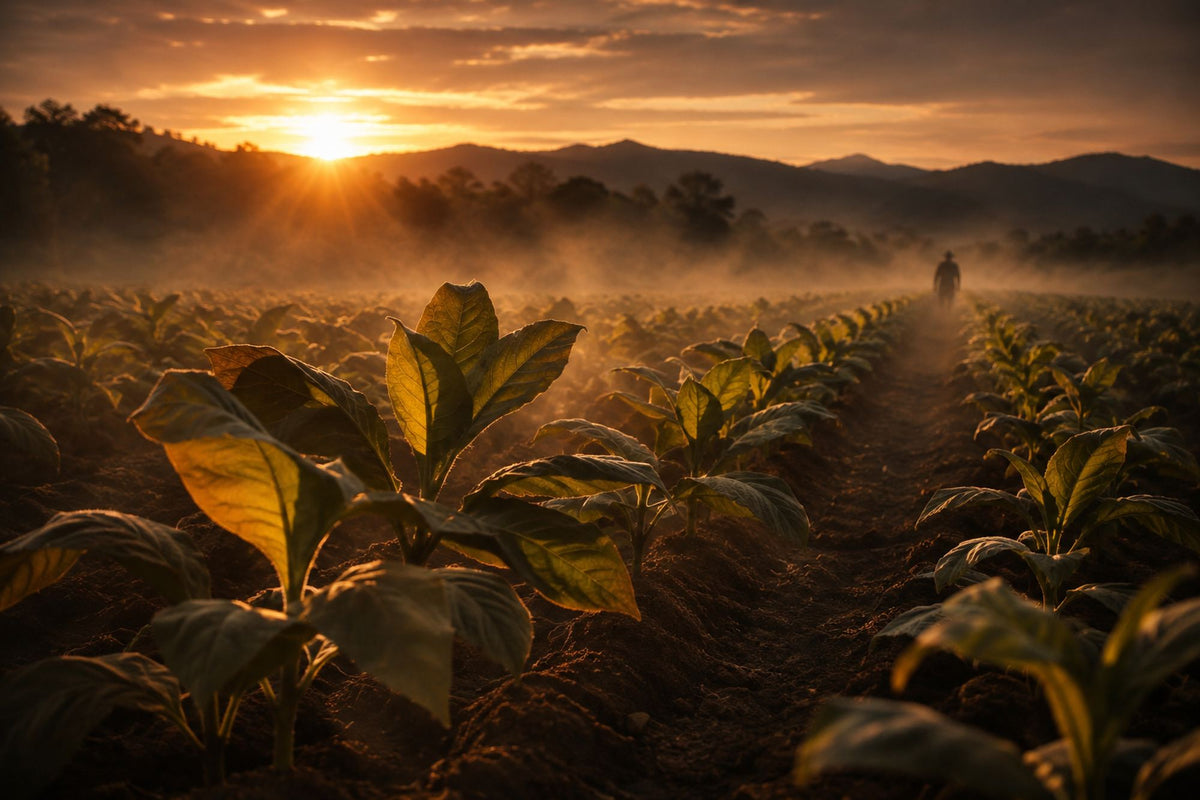
Ask ten smokers what makes a cigar strong and you will hear ten answers, most of them about the color of the wrapper. Strength is simpler than that, and more interesting: it starts in the field, on one part of the plant, long before the cigar is rolled.
They often travel together, but not always. A cigar can be full-bodied and mild, or light-bodied with a real kick, and almost any strength can carry rich flavor.
The part of the plant. Tobacco leaves are named by how high they grow. Volado, from the bottom, burns well and is mild. Seco, from the middle, brings aroma and flavor. Ligero, from the top, gets the most sun, grows thick and oily and carries the most strength; it is the leaf behind full cigars, and it needs the longest fermentation and aging of all.
The land. Soil and climate shape the leaf. Nicaraguan tobacco, grown around Estelí and on the volcanic island of Ometepe, is known for its bold, peppery character, while other regions tend toward smoother, rounder leaf. The same seed grown in two valleys gives two different tobaccos.
The blend. A blender sets the strength mostly through the share of ligero in the filler and the regions it comes from, then tunes it with the binder and the wrapper.
Time. Fermentation and aging round off the edges. A blend can feel stronger young than after a year in the box.
A maduro wrapper is dark because it was fermented longer, not because it is stronger, and many maduros taste sweet and smooth. A pale Connecticut wrapper usually signals a mild cigar, but the same wrapper over a filler heavy in ligero can still be full. Judge by the blend, not by the color.
Every cigar at Cigar Smiths carries a strength meter with five steps:
Strength is personal. Treat the meter as a starting point, and trust your own palate after a few cigars.
Most cigars grow stronger as they burn. Oils and tars collect in the tobacco that is left, so the final third is often the boldest. Smoking slowly keeps the cigar cooler and smoother; puffing fast makes any cigar hotter and harsher.
Find the strength that suits you, and the rest of the journey is flavor: regions, wrappers and sizes. That is where it gets good.
Keep reading
A cigar's size tells you how long it lasts and changes how it tastes. Length, ring gauge and the seven shapes on the Cigar Counter, in one page.
The weekly digest
The best of the Journal, new arrivals and Inner Circle drops, in one email. For adults 21 and over.